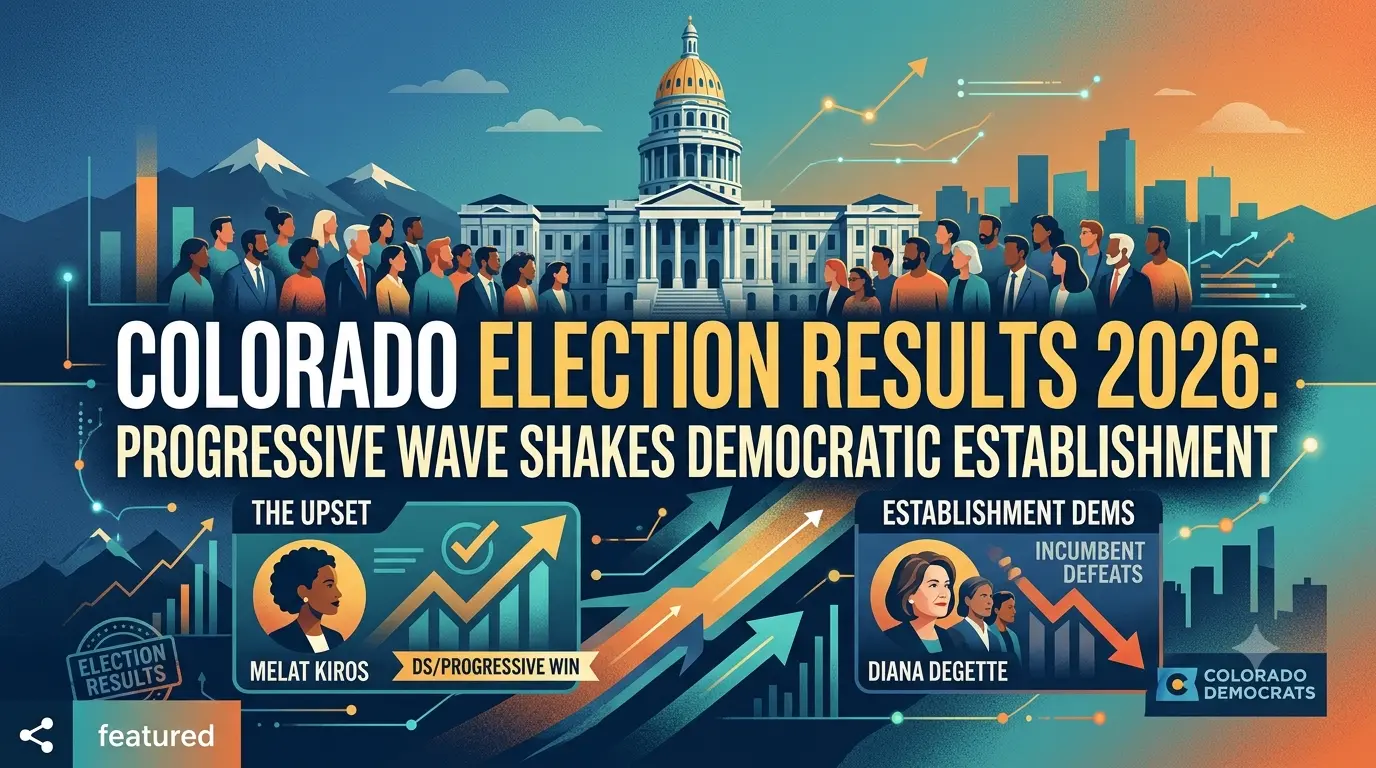
The 2026 Colorado primary elections have delivered what political analysts are calling a seismic shift in the state’s political landscape. With voters expressing deep frustration with Washington establishment politics, Tuesday night’s results sent shockwaves through the Democratic Party, unseating a 30-year incumbent and revealing the growing power of progressive movements across the Rocky Mountain state.
In what may be the most consequential election night of the 2026 cycle, Colorado voters demonstrated that they are ready for change—and they’re not willing to wait their turn. From Denver to Boulder, the message was clear: incumbency no longer guarantees security, and the issues that matter most to voters are reshaping the political map in real-time.
The Night’s Biggest Upset: Melat Kiros Defeats Diana DeGette
The most stunning result of the evening came from Colorado’s First Congressional District, where 29-year-old political newcomer Melat Kiros handily defeated 30-year incumbent Representative Diana DeGette. This wasn’t just a primary challenge—it was a political earthquake that signals a fundamental realignment within the Democratic Party.
Kiros, who only joined the Democratic Socialists of America during her campaign, represents a new breed of politician shaped entirely by the tumultuous events of the 2020s. Her journey from law firm associate to congressional candidate embodies the frustration and determination of a generation that has come of age during pandemic, political polarization, and international conflict.
“This isn’t just about replacing one generation of leaders with another,” Kiros told Vox in an interview last month. “It’s about replacing it with moral clarity, with urgency, with courage—and making sure that the will of the voters is actually being represented and fought for at the federal level. “
How a Campaign Slogan Became a Movement
Kiros’s path to victory began with a moment that could have ended her legal career. Three years ago, as an associate at the prestigious law firm Sidley Austin, she wrote an open letter criticizing Israel’s actions in Gaza. The letter, which went viral, challenged the firm’s position on what she called “the moral question of our time.” Her stance, rooted in her family’s experience with genocide in Ethiopia’s Tigray region, cost her the job but ultimately launched her political career.
The slogan “Fired over Palestine, now running for Congress” became a rallying cry, attracting endorsements from prominent progressive figures including streamer Hasan Piker. This narrative resonated deeply with voters who have grown increasingly skeptical of establishment politics and corporate influence.
What Kiros Stands For
Kiros’s platform represents a comprehensive progressive agenda that includes:
- Medicare-for-all as the only pragmatic solution to America’s healthcare crisis
- Housing first policies to address the growing homelessness epidemic
- Tuition-free public college and student debt cancellation
- Ending all military aid to Israel, which she describes as “funding a genocide”
- Campaign finance reform to break the influence of billionaires and corporations
“The only reason we don’t have those things is because of the billionaires and the corporations that are making way too much money keeping things exactly as they are today, ” Kiros explained, emphasizing the connection between money in politics and policy inaction.
The incoming congresswoman has already made waves by declaring she will not vote for any Democratic leader who accepts corporate PAC money—a position that puts her at odds with Minority Leader Hakeem Jeffries and the party establishment.
Beyond the First District: A Wave of Progressive Victories
The Kiros victory wasn’t an isolated incident. Across Colorado, progressive candidates and anti-establishment sentiments dominated the primary landscape.
Governor’s Race: Weiser Defeats Bennet
Senator Michael Bennet, who was running for governor, suffered a significant loss to Attorney General Phil Weiser. While Bennet will retain his Senate seat, the rejection of his gubernatorial ambitions represents a clear message from voters about their preferences for state leadership.
Weiser, who ran on a platform of protecting Colorado values and fighting for working families, positioned himself as the candidate who could bridge divides while maintaining progressive momentum. His victory suggests that voters want experienced leadership but are looking beyond Washington-insider credentials.
Senate Primary: Hickenlooper Holds On—Barely
Perhaps the most telling result of the evening was incumbent Senator John Hickenlooper’s narrow victory over progressive challenger State Senator Julie Gonzales. Despite Hickenlooper’s two decades of political prominence in Colorado, he was only winning by about 10 points as of Wednesday morning.
This unexpectedly close margin against a challenger who raised little money indicates that even popular incumbents are vulnerable to anti-establishment sentiment. Gonzales, who ran on a platform of bold progressive action, tapped into the same frustration that fueled Kiros’s victory.
What the Close Margins Reveal
The narrow margins in these races suggest that Colorado Democrats are deeply divided between establishment and progressive wings. The party’s ability to unite behind general election candidates will be tested in the months ahead, particularly as national Republicans look to capitalize on Democratic divisions.
The Anti-Incumbent Wave: Why Voters Are Angry
The common thread running through Tuesday’s results is voter anger—not just at specific politicians, but at the system itself. The Washington Post’s election coverage captured this sentiment perfectly, noting that Colorado voters expressed “deep frustration with Washington establishment politics.”
Factors Driving the Anti-Incumbent Sentiment
1. Economic Anxiety
Despite positive economic indicators, many Coloradans continue to struggle with housing costs, healthcare expenses, and student debt. The disconnect between macroeconomic data and personal financial reality has created a fertile ground for anti-establishment candidates.
2. Foreign Policy Discontent
The Israel-Gaza conflict has emerged as a defining issue for a generation of Democratic voters. The party’s continued support for military aid to Israel, despite widespread opposition among the base, has created tensions that primary challenges exploit.
3. Generational Shift
Kiros, at 29, represents the first generation of politicians shaped entirely by 2020s politics. The pandemic, the Biden presidency, the fall of Roe v. Wade, and the ongoing Middle East conflicts have created a cohort of voters and candidates who view the Democratic establishment with deep suspicion.
4. Trust Deficit
“I just lost faith in the system, ” Kiros told Vox, a sentiment echoed by voters across the state. The perception that politicians serve donor interests rather than constituent needs has eroded trust in institutional leadership.
What This Means for National Politics
The Colorado results have national implications that extend far beyond the Rocky Mountain state. Political analysts are watching closely to see whether the progressive wave that began in New York and spread to Colorado will continue across the country.
A Blueprint for Progressive Challenges
Kiros’s campaign offers a roadmap for progressive challengers nationwide:
- Authentic personal narrative that connects personal experience to political positions
- Clear moral framing of issues like foreign policy and economic justice
- Strategic use of social media and online influencers to build grassroots support
- Direct attacks on establishment fundraising and corporate influence
- Bold policy positions that differentiate from incumbents without appearing unrealistic
The DSA Factor
The Democratic Socialists of America have emerged as a powerful force in primary elections, successfully backing candidates in New York and now Colorado. While Kiros only joined the organization during her campaign, she acknowledged their critical role in her victory.
“They were critical to the success of our field program, and in helping us get the word out about our campaign, ” Kiros said, highlighting the importance of organizational infrastructure for progressive challenges.
Implications for 2028 and Beyond
The Colorado results suggest that the Democratic Party is undergoing a fundamental transformation. The question is no longer whether progressives can challenge incumbents, but how establishment leaders will respond to this growing insurgency.
“We’ll take power, the question is what we do with it,” Kiros said, expressing confidence that Democrats would win the House and Senate in 2026 and the White House in 2028. Her emphasis on delivering results reflects the impatience of a generation that has watched promises go unfulfilled.
Key Races and Results Summary
Colorado’s First Congressional District
- Winner: Melat Kiros (Progressive Challenger)
- Defeated: Rep. Diana DeGette (30-year incumbent)
- Key Issues: Israel-Gaza policy, economic justice, generational change
Colorado Governor’s Race
- Winner: Phil Weiser (Attorney General)
- Defeated: Sen. Michael Bennet
- Key Issues: State leadership, continuity vs. change
Colorado Senate Primary
- Winner: Sen. John Hickenlooper (Incumbent)
- Runner-up: State Sen. Julie Gonzales (Progressive Challenger)
- Margin: Approximately 10 points (unexpectedly close)
Deeper Analysis: The Forces Reshaping Colorado Politics
Demographic Shifts
Colorado has undergone significant demographic changes over the past decade, with increasing diversity, urbanization, and educational attainment. These shifts have created a more progressive electorate that is less attached to traditional party loyalties.
The Denver Factor
The First District, encompassing much of Denver, has become increasingly young and diverse. These voters are more likely to support bold progressive policies and less likely to accept incrementalism as a strategy.
Economic Pressures
Colorado’s housing crisis, rising healthcare costs, and student debt burden have created economic anxiety that progressive candidates can channel. Kiros’s focus on these pocketbook issues resonated with voters who feel left behind by economic recovery.
International Issues Dominate
The Israel-Gaza conflict proved to be a decisive factor in Kiros’s victory. Her willingness to take a strong stance against military aid to Israel, despite potential political risks, set her apart from an incumbent who was perceived as insufficiently critical of Israeli government actions.
The Future of Democratic Politics
A New Generation of Leadership
Kiros is one of the first of a new generation of politicians whose entire adult lives have been shaped by the 2020s. Her emergence signals a shift in political leadership that will likely accelerate in coming cycles.
“This is the most anti-incumbent cycle we’ve seen in a really long time, ” Kiros told Vox. “So I think this is an opportunity to change the party in a way that—I don’t think we’ll have another chance like this. To pass it up, I think, is irresponsible. “
Challenges Ahead
The progressive movement faces significant challenges:
- Maintaining momentum between election cycles
- Building organizational capacity for future challenges
- Balancing bold vision with legislative pragmatism
- Unifying the party ahead of general elections
- Navigating the expectations of an impatient base
Republican Opportunities
Democratic divisions could create opportunities for Republican candidates in general elections. However, Colorado’s increasingly blue demographics make Democratic victories likely in most statewide and congressional races.
Conclusion: Colorado’s Message to the Nation
The 2026 Colorado primary results represent more than just local political change—they signal a fundamental shift in American politics. Voters are demanding accountability, moral clarity, and urgent action on issues that matter most to them.
Melat Kiros’s journey from fired law associate to congressional nominee embodies the possibilities of a political system in flux. Her victory, alongside other progressive successes, suggests that the Democratic Party is entering a period of transformation that will reshape its policy priorities, leadership, and electoral strategies.
The question now is whether the party establishment will adapt to this new reality or resist the changes that voters have clearly demanded. As Kiros and her fellow progressives prepare to take office, the eyes of the nation will be on Colorado to see what happens next.
“This isn’t just about replacing one generation of leaders with another,” Kiros said. “It’s about replacing it with moral clarity, with urgency, with courage.”
That message, delivered by Colorado voters on Tuesday night, resonates far beyond the state’s borders. The political earthquake that began in New York and shook Colorado is likely to continue spreading across the country, reshaping American politics for years to come.
This article was updated with the latest Colorado election results as of July 1, 2026. All results are based on reporting from Vox, The Washington Post, and other major news outlets covering the Colorado primary elections.