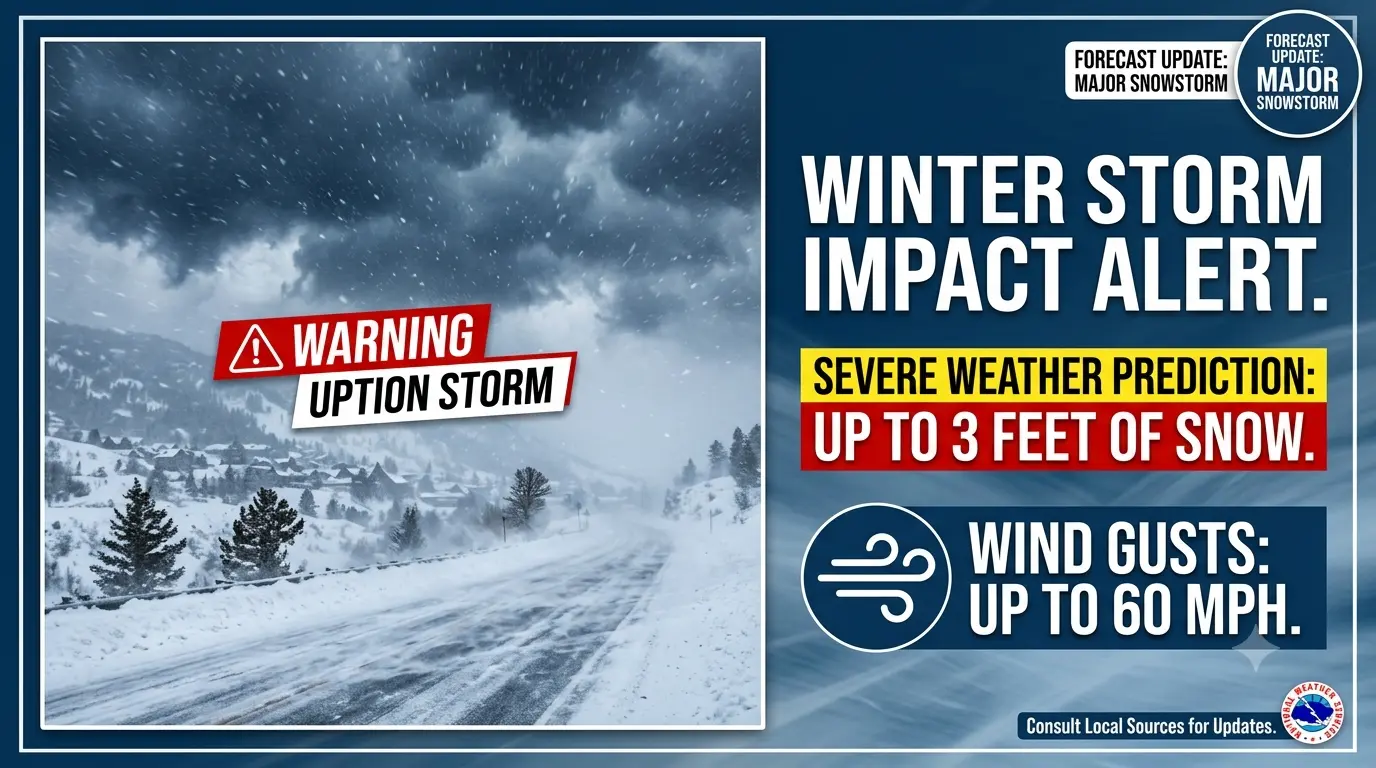
Winter Storm Warning: Up to 3 Feet of Snow and 60 MPH Winds to Impact Travel This Week
A significant and potentially dangerous winter storm is set to slam the region this week, prompting the National Weather Service to issue a winter storm warning for multiple states. Forecasters are predicting heavy snowfall totals of up to three feet in some areas, accompanied by howling winds that could reach 60 mph. This powerful system is expected to create life-threatening travel conditions, widespread power outages, and significant disruptions to daily life.
Understanding the Scope: What This Winter Storm Warning Means
A winter storm warning is the most serious alert issued for significant winter weather. It is not issued lightly and indicates that a major storm is either imminent or already occurring. This warning is a call to action, signaling that conditions will be dangerous and potentially life-threatening.
Key Impacts of This Storm:
- Heavy Snowfall: Accumulations are forecast to reach 2 to 3 feet in the highest elevations, with 1 to 2 feet possible in lower-lying areas. This rapid accumulation will make travel nearly impossible.
- Extreme Winds: Gusts up to 60 mph will create blizzard-like conditions with near-zero visibility. These winds will also lead to significant blowing and drifting snow, making roads impassable and creating massive snowdrifts.
- Dangerous Wind Chills: The combination of strong winds and cold temperatures will result in life-threatening wind chills, potentially dropping to -20°F or lower. Frostbite can occur on exposed skin in a matter of minutes.
- Widespread Power Outages: Heavy, wet snow accumulating on trees and power lines, combined with strong winds, will likely bring down branches and power lines, leading to widespread power outages that could last for days.
Recent Events: A Pattern of Extreme Weather
This latest winter storm warning comes on the heels of an unseasonably cold and volatile weather pattern. Just weeks ago, the region experienced record-breaking low temperatures for the month of June, a stark reminder of the power and unpredictability of nature.
The ‘Weather Whiplash’ Effect
Meteorologists are describing the current situation as a classic case of “weather whiplash.” The same areas that are now bracing for heavy snow were recently under flood watches and warnings. The rapid transition from heavy rain and snowmelt to a deep freeze and new snowfall creates a unique set of compounded hazards.
Flooding Concerns Persist
Before the deep freeze sets in, the heavy rain that preceded this storm has already saturated the ground and swollen rivers. A sudden drop in temperature can cause the water in rivers to freeze, leading to ice jams that can cause rapid, localized flooding. Additionally, as the new snow begins to melt, it will add to the runoff, potentially exacerbating river flooding concerns in the coming days.
Winter Storm Safety: A Step-by-Step Guide
When a winter storm warning is issued, preparation is your best defense. Here is a comprehensive guide to ensure you, your family, and your property remain safe.
Before the Storm: Preparation is Key
- Stay Informed: Continuously monitor local weather reports from trusted sources like the National Weather Service and local news. Be aware of the latest forecasts and any changes to the warning.
- Create an Emergency Kit: Assemble a kit that includes:
- Water: One gallon of water per person per day for at least three days.
- Food: A three-day supply of non-perishable food that doesn’t require cooking or refrigeration.
- Light & Power: Flashlights, batteries, and portable chargers for cell phones. Consider a backup power source for essential medical devices.
- Warmth: Extra blankets, sleeping bags, and warm winter coats for each person.
- First-Aid: A well-stocked first-aid kit and a seven-day supply of any essential medications.
- Communication: A battery-powered or hand-crank radio for weather updates.
- Prepare Your Home:
- Insulate your walls and attic.
- Caulk and weather-strip doors and windows to prevent drafts.
- Insulate pipes and allow faucets to drip slowly to prevent freezing.
- Bring pets inside.
- Prepare Your Vehicle:
- Ensure your gas tank is full.
- Pack a winter car emergency kit: blanket, flashlight, ice scraper, jumper cables, sand or kitty litter for traction, and a shovel.
- Let someone know your travel route and expected arrival time.
During the Storm: Stay Safe and Hunker Down
- Limit Travel: The single most important rule during a winter storm warning is to stay off the roads. If you must travel, do so during the day and in a caravan with another vehicle.
- Stay Indoors: Unless it is an absolute emergency, remain indoors. The combination of heavy snow, high winds, and frigid temperatures is a deadly mix.
- Conserve Heat: If the power goes out, close off unoccupied rooms and stuff towels in the cracks under doors to keep the warm air in.
- Check on Neighbors: The elderly and those with medical conditions are the most vulnerable. Check on them via phone or text to ensure they are safe.
After the Storm: Proceed with Caution
- Wait for the All-Clear: The danger doesn’t end when the snow stops falling. Continue to monitor the news for updates on road conditions and emergency services.
- Be Careful Shoveling: Shoveling heavy snow is strenuous and can cause heart attacks. Take frequent breaks and push the snow rather than lifting it when possible.
- Check for Damage: Look for downed power lines, broken tree limbs, and any structural damage to your home. Report downed power lines immediately.
- Clear Vents: Ensure that all external vents for your furnace and other appliances are clear of snow to prevent dangerous carbon monoxide buildup.
Travel Advisory: Navigating the Winter Storm Warning
Roads will be treacherous, and many will be closed. Your safety should always come first. If you must travel, here are some critical tips:
1. Check Road Conditions
Before you even think about leaving, check the latest road conditions online or by calling your state’s transportation department. Major highways and mountain passes are often the first to close.
2. Drive for the Conditions
- Slow Down: Speed limits are for ideal conditions. Reduce your speed significantly and leave plenty of space between you and the car ahead.
- Use Your Headlights: Turn on your low-beam headlights. It’s not just for you to see the road, but for others to see you.
- Avoid Cruise Control: Never use cruise control on snow or ice. You need to maintain full control of your vehicle’s acceleration and deceleration.
- Know Your Brakes: If you have anti-lock brakes (ABS), apply firm, continuous pressure. If you don’t have ABS, gently pump the brakes to avoid skidding.
3. If You Get Stranded
- Stay in Your Vehicle: Do not leave your car to walk for help. It is easy to get disoriented in a whiteout.
- Make Yourself Visible: Tie a brightly colored cloth to your antenna or door handle to alert rescuers.
- Run the Engine Sparingly: Run the car and heater for about 10 minutes every hour to conserve fuel. Ensure the exhaust pipe is clear of snow to prevent carbon monoxide poisoning.
- Keep Moving: Clap your hands and move your arms and legs to keep your blood circulating and stay warm.
The Science Behind the System: Why This Storm is So Powerful
This isn’t just a typical winter storm. Several atmospheric factors are converging to create a potentially historic event. The weather service is closely monitoring this “bomb cyclone” or rapidly intensifying low-pressure system.
The Ingredients for a Major Winter Storm:
- Arctic Air Mass: A massive, cold air mass from the Arctic has been pushed southward. This provides the necessary cold air for the precipitation to fall as heavy snow.
- Moisture Feed: A strong and continuous stream of moisture from the Pacific Ocean is being drawn into the storm system. This “atmospheric river” provides the abundant moisture needed for heavy snowfall totals.
- Rapid Intensification: The collision of the cold Arctic air and the warm, moist Pacific air causes the storm system to deepen rapidly. This rapid drop in atmospheric pressure is what creates the extreme winds and blizzard-like conditions.
Why the Winds are So Dangerous
The rapidly intensifying pressure gradient—the difference in pressure between the storm’s center and the surrounding area—is what generates the powerful 60 mph gusts. These winds are not just an inconvenience; they are a major threat.
- Blowing Snow: The wind will pick up the falling and falling snow, significantly reducing visibility to near zero in a phenomenon known as a “whiteout.”
- Drifting Snow: The wind piles snow into massive drifts, which can quickly block roads and even bury vehicles.
- Power Outages: As mentioned, the wind is the leading cause of widespread power outages during storms like this.
Long-Term Outlook: The Climate Connection
While a single storm cannot be directly attributed to climate change, the increasing frequency of extreme weather events is a clear trend that scientists are studying closely. “Weather whiplash”—like the transition from flooding to a deep freeze and heavy snow—is becoming more common.
The warming atmosphere holds more moisture, which can fuel more intense precipitation events, both rain and snow. When the conditions are cold enough, this can translate into heavier snowfalls, exactly as predicted by many climate models for certain regions. While it might seem counterintuitive, global warming can lead to more intense winter storms in some areas, as the warmer air holds more moisture that falls as snow when it meets cold conditions.
Conclusion: Heed the Winter Storm Warning
This is a serious and potentially dangerous weather situation. The winter storm warning is a clear signal that you need to take immediate action to protect yourself and your loved ones. Stay informed, prepare your home and vehicle, and above all, avoid all unnecessary travel until the storm passes. Your safety is the most important priority.
Stay warm, stay safe, and be prepared for the storm to last for several days.